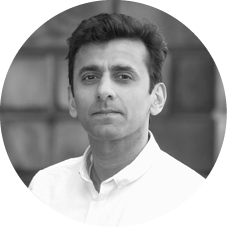
Prof Nasar Meer FBA
Professor of Social and Political Science in the School of Social & Political Sciences. He is Principal Investigator of Racial Equality since Devolution: Divergences, Outcomes and Frontiers (Nuffield Foundation, 2026-2028) author of The Social Life of Justice to be published this year.
https://www.gla.ac.uk/schools/socialpolitical/staff/nasarmeer/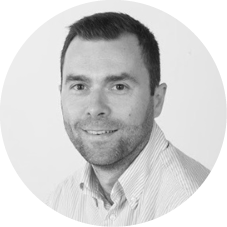
Dr Timothy Peace
Senior Lecturer in Politics at the University of Glasgow. His research focuses on Comparative European Politics and he edited the book Muslims and Political Participation in Britain (Routledge 2015).
https://www.gla.ac.uk/schools/socialpolitical/staff/timothypeace/

Scottish Election 2026
Section 4: Democracy and representation
- Looking beyond numbers: Gender sensitivity in the new parliament (Prof Meryl Kenny, Prof Sarah Childs)
- Disability representation in the Scottish Parliament: Gains, gaps, and promises (Prof Stefanie Reher)
- More progress without parity? Ethnic minority representation at Holyrood after 2026 (Prof Nasar Meer FBA, Dr Timothy Peace)
- Who represents Scotland? Class and gender of Holyrood in 2026 (Shevaun Smith)
- Questions of representation: How diverse are our MSPs (Dr Lynn Bennie)
- Over the rainbow? What next for Scotland’s new “Rainbow Parliament”? (Prof Christopher Carman)
The 2026 Scottish election has produced a more varied minority ethnic cohort than the one that preceded it. It includes new parties, new regions and new biographies. Yet the scale of representation still lags behind Scotland’s population profile and suggests progress without parity.
Scotland is more diverse than at any earlier point in its devolved electoral history. Scotland’s 2022 Census recorded that 12.9% of the population identified with a minority ethnic group, including 7.1% from non-white minority ethnic backgrounds. By contrast, the Parliament elected in 2021 included just six minority ethnic MSPs across the session: Foysol Choudhury, Pam Gosal, Sandesh Gulhane, Anas Sarwar, Kaukab Stewart and Humza Yousaf. That amounted to just under 5% of the chamber.
The 2026 result has increased the number of publicly self-identified Black and minority ethnic MSPs from six to eight. This is a modest shift moving from around 4.7% of the Parliament to around 6.2%. It is therefore a real advance, but still below both the non-white minority ethnic census benchmark of 7.1% and the wider minority ethnic benchmark of 12.9%.
The composition of the cohort has changed more dramatically than the overall number. Of the six minority ethnic MSPs associated with the 2021-2026 Parliament, only Anas Sarwar remains in the 2026 cohort. Humza Yousaf and Foysol Choudhury did not stand; Pam Gosal, Sandesh Gulhane and Kaukab Stewart were not returned. This means the new minority ethnic presence at Holyrood is a substantially reconfigured cohort rather than a continuation of the previous one.
The 2026 cohort includes Michelle Campbell, Zen Ghani and Simita Kumar for the SNP; Anas Sarwar and Irshad Ahmed for Scottish Labour; Iris Duane and Q Manivannan for the Scottish Greens – who is also Holyrood’s first non-binary MSP; and Yi-Pei Chou Turvey for the Scottish Liberal Democrats. This party spread is one of the election’s most significant changes. In the previous Parliament, minority ethnic representation was concentrated in the SNP, Labour and Conservative groups. After 2026, it extends across to the Greens and Liberal Democrats and while the Conservatives and Reform UK have none, both parties fielded a number of ethnic minority candidates.
This wider distribution suggests that ethnic minority representation is becoming less confined to a small number of parties or political pathways. The Greens’ presence is especially striking. Iris Duane, elected for Glasgow, and Q Manivannan, elected for Edinburgh and Lothians East, broaden the cohort in relation to migration, gender identity and political generation. Yi-Pei Chou Turvey’s election for the Liberal Democrats in North East Scotland adds a further regional and party dimension.
The geography has also shifted although Glasgow remains central. Zen Ghani won Glasgow Cathcart and Pollok for the SNP, Anas Sarwar was returned on the Glasgow list for Labour, and Iris Duane was elected on the Glasgow list for the Greens. But Edinburgh and the Lothians now play a much larger role, with Simita Kumar, Irshad Ahmed and Q Manivannan all elected there. The outcome therefore moves beyond an exclusively Glasgow-centred account of ethnic minority representation.
The case of Glasgow Pollok is symbolically important, as the abolition of this constituency, previously represented by Humza Yousaf, and the creation of successor constituencies Glasgow Cathcart and Pollok and Renfrewshire North and Cardonald were won by Zen Ghani and Michelle Campbell. Despite boundary changes and Yousaf’s departure, this part of Glasgow continues to return minority ethnic MSPs. The continuity is geographical rather than personal, but it is politically meaningful.
Conversely, the previous Parliament included minority ethnic MSPs with significant governing experience, most notably Humza Yousaf, who had served as First Minister, and Kaukab Stewart, who held ministerial office. After 2026, both have gone and leave the governing party without a minority ethnic MSP whose parliamentary service makes Cabinet office an obvious next step. The result is a thinner pipeline between descriptive representation and executive power. Importantly, minority ethnic candidates, especially women and visibly Muslim candidates, continue to report disproportionate harassment and intimidation. Humza Yousaf’s rise to the office of First Minister, in which political rhetoric cast minority politicians and communities as less fully Scottish, less legitimate, and more politically suspect, was a reminder that visibility can also intensify racist and Islamophobic abuse. This is something openly brought into the Scottish Parliament with a newly elected Reform UK MSP who has called for the deportation of British Muslims and endorsed Tommy Robinson.
There is also a difference in electoral route. Michelle Campbell, Zen Ghani and Simita Kumar entered through constituency victories, while Anas Sarwar, Irshad Ahmed, Iris Duane, Q Manivannan and Yi-Pei Chou Turvey entered through the regional list. This shows that minority ethnic representation is present across both elements of Scotland’s electoral system, although the regional list remains the more common route.
The broader lesson is that representation has widened, but the underlying gap remains. The question after 2026 is therefore less whether Holyrood has made progress. It has. The harder question is how that progress becomes durable, proportionate and ordinary rather than exceptional.
